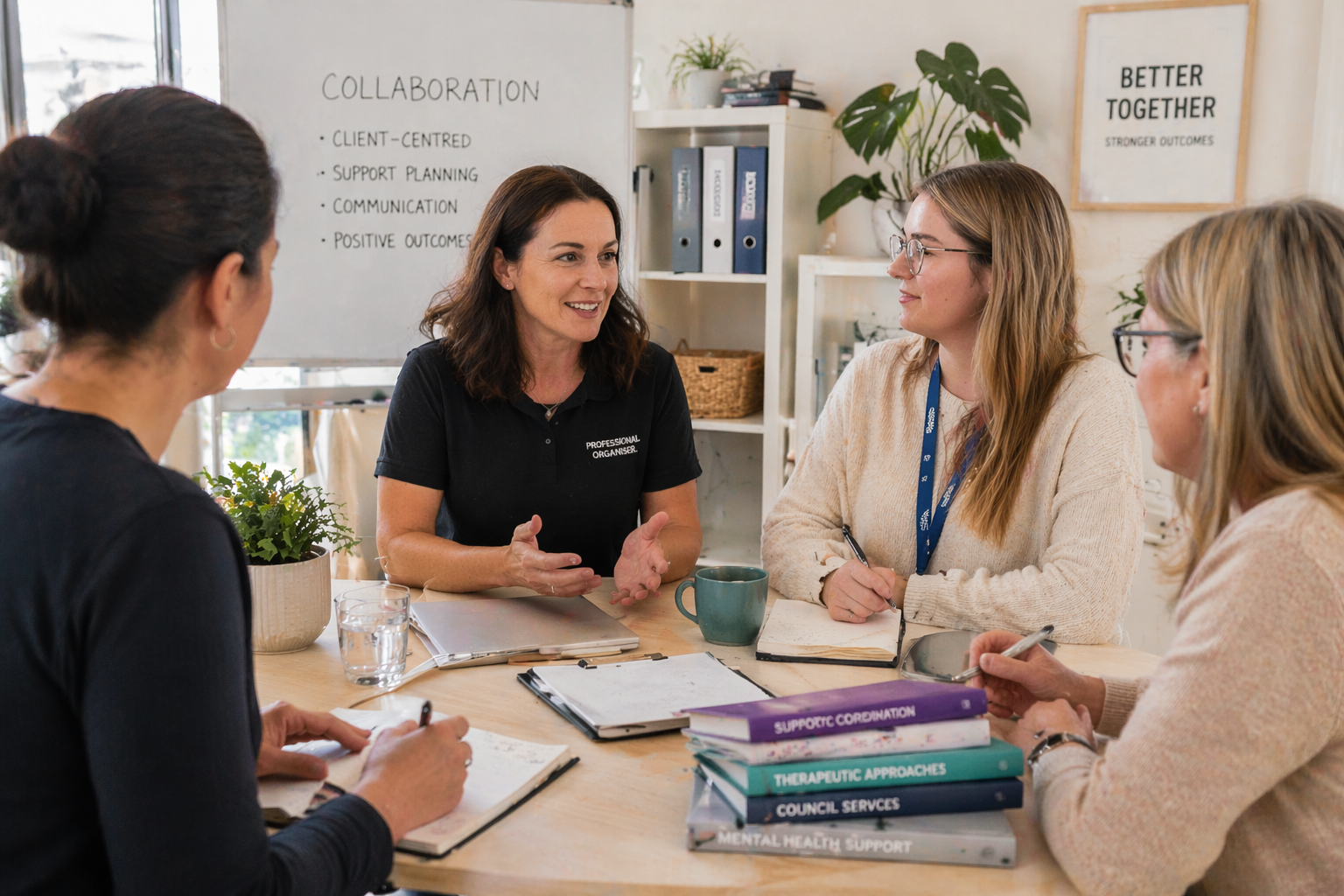
Industry Standards and Professional Practice
This training is aligned with recognised industry standards, including the Code of Practice outlined by the Institute of Professional Organisers (IOPO).
These standards define how Professional Organisers work responsibly with clients, including expectations around ethics, confidentiality, and scope of practice.
Professional organising is not just about creating order; it involves working with people, often in complex or sensitive situations. Clear boundaries, ethical conduct, and professional awareness are essential.
Industry Language and Key Concepts (AKA jargon)
Professional organising is more than creating order; it involves understanding people, behaviour, and complex situations.
The terms below are commonly used within the organising industry and allied industries, and will help you build that understanding in practice.
If you’re new to professional organising, you may hear terms that feel unfamiliar or even a little intimidating.
You’re not expected to know these. This is simply the language used within the organising industry and allied industries, and understanding it will help you feel more confident as you step into this work.
You are far more likely to hear this language when speaking with other organisers or professionals. It is not how you would typically speak with a client, and you would not expect clients to use this language either.
This is particularly relevant when working alongside other professionals such as NDIS support coordinators, therapists & services, and mental health workers. In these environments, shared language supports communication and clarity across services.
-
Decision fatigue occurs when a person becomes mentally exhausted from making too many decisions over time.
In an organising context, this can slow progress significantly, as even simple choices begin to feel overwhelming, leading to avoidance or shutdown. -
Complex and Chronic Disorganisation describes a persistent pattern of disorganisation where repeated attempts to improve have not been successful. Over time, this can lead to a diminished quality of life and an expectation that change is not possible.
Chronic disorganisation is ongoing and long-term, whereas complex disorganisation may be situational. Not all complex disorganisation is chronic, but chronic disorganisation is often complex.
-
Domestic Environmental Neglect refers to a pattern where a person is unable to maintain their living environment in a way that supports their safety, health, and day-to-day functioning. It is often associated with broader challenges in self-care and wellbeing.
Severe domestic squalor describes the condition of a home, not the person. In many cases, underlying factors such as physical health, mental health, or capacity play a significant role in how a person is able to care for themselves and their environment.
-
Hoarding Disorder is a recognised mental health condition involving a persistent difficulty discarding possessions, often resulting in significant accumulation that compromises the function and safety of a home. It requires a considered, informed approach, as standard organising methods alone are not appropriate or effective in these situations.
-
Mental health refers to a person’s overall emotional, psychological, and social wellbeing, and how they cope with everyday life. It influences how a person thinks, feels, makes decisions, and functions within their home and environment.
In an organising context, mental health can directly impact a person’s ability to make decisions, maintain systems, and engage in the process of change.
-
Mental illness is a general term for a range of conditions that affect how a person thinks, feels, and behaves, including anxiety, depression, and other disorders. These conditions can significantly impact daily functioning, decision-making, and a person’s ability to manage their home and environment.
-
Psychosocial influence refers to the way psychological and social factors interact to affect how a person lives, functions, and manages their environment. This includes things like relationships, life experiences, stress, and support systems.
In an organising context, these influences can affect decision-making, behaviour, and a person’s ability to create and maintain order in their home.
-
Executive function refers to the mental skills used to plan, start, manage, and complete tasks. Can be a big problem for those with ADHD.
When these skills are impacted, a person may know what needs to be done but struggle to take action, stay focused, or follow through. -
Cognitive overload happens when there is too much information or visual input for the brain to process effectively. In the home, excessive clutter can overwhelm the senses, making it difficult to think clearly, make decisions, or take action.
Let me put this super plainly….. You get this when others rely on using your brain…. -
Capacity refers to a person’s physical, mental, and emotional ability to manage tasks and maintain their environment. Understanding capacity is essential when working with clients, as expectations and approaches must be adjusted to suit the individual.
There are some specifics to consider with this category.